Do Fine Line Tattoos Last? What Actually Happens Over Ten Years
·Vladimir Kozachenko
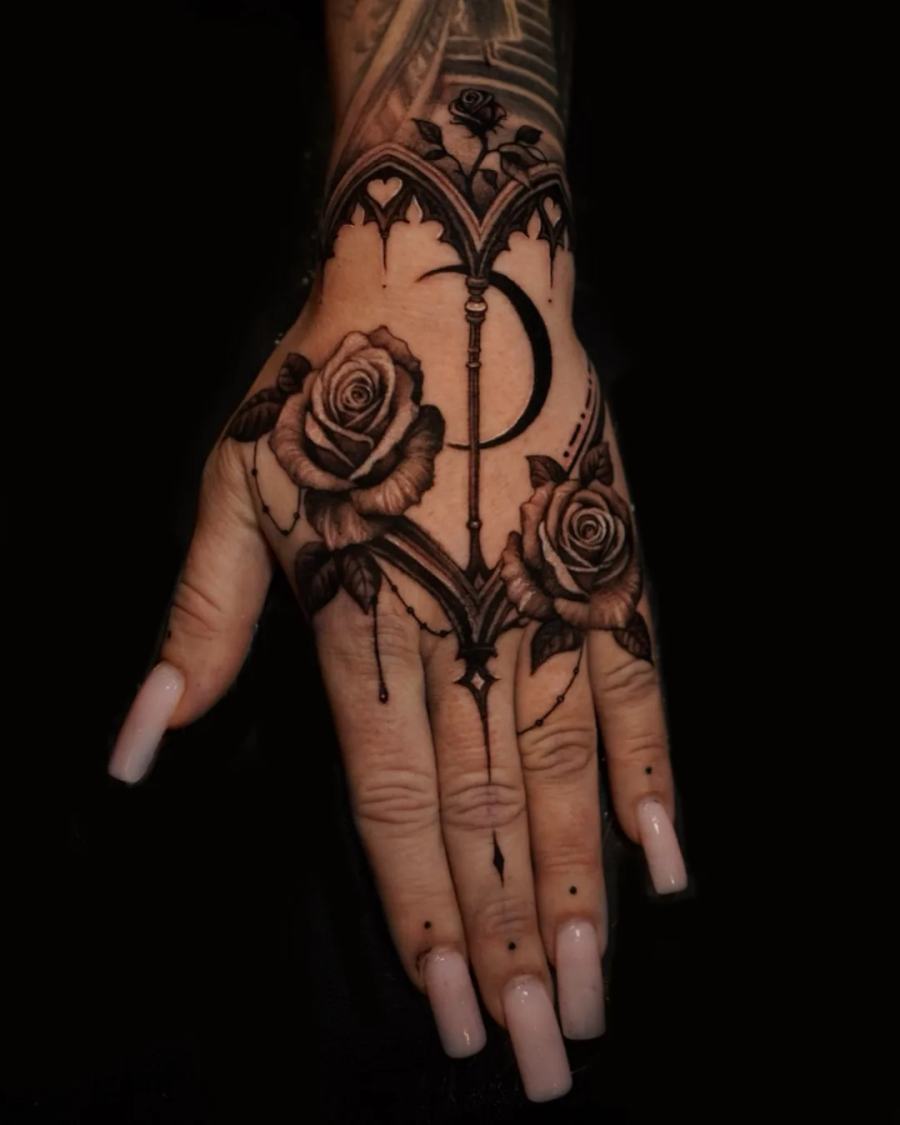
Fine line is the most requested style in Los Angeles right now, and the most common question about it is whether it survives. The honest answer is that some fine line work looks almost unchanged after ten years and some becomes an unreadable smudge after three - and the difference is decided before the needle touches skin, in the design and the placement.
What actually changes in the skin
A tattoo is pigment sitting in the dermis, under a layer of living tissue that keeps renewing. Over the years two things happen to it. The pigment particles spread very slightly sideways, so every line gets a little wider and a little softer. And the skin above it keeps ageing, which scatters light and lowers contrast.
Neither of these is a flaw in the work. They happen to every tattoo, in every style. The reason they matter more in fine line is arithmetic: if a line is one millimetre wide, a small amount of spread is invisible. If a line is a tenth of a millimetre wide and sits a tenth of a millimetre from the next line, the same amount of spread merges the two into one grey mark.
The rule that decides everything: space between the lines
The single strongest predictor of how a fine line piece ages is not the thinness of the line. It is the distance between neighbouring lines.
A thin line with generous space around it stays a thin line for a very long time. A cluster of thin lines packed tightly together - dense hatching, tiny lettering, a miniature portrait, fine dot shading inside a small shape - will eventually fill in and read as a solid patch.
This is why a well-designed fine line piece often looks emptier on paper than clients expect. That emptiness is what it will still look like in a decade.
Where it holds and where it does not
Inner forearm, outer upper arm, thigh, calf, upper back, chest - stable skin, moderate stretch, usually covered. Fine line ages well here.
Hands, fingers, feet, wrists on the palm side - high friction, constant sun, thin skin and fast turnover. Fine line on fingers commonly needs a touch-up within a year or two, and some of it will never hold cleanly no matter who does it. Anyone who promises otherwise is selling.
Ribs, inner arm, inner thigh - soft, stretchy skin. Fine detail here spreads faster than on a forearm.
Anywhere that creases - the inside of an elbow, the back of a knee - breaks fine lines over time.
Size is not a style choice, it is a longevity choice
Most fine line work that fails was simply drawn too small for the amount of detail in it. A design with twelve elements at four centimetres will close up; the same design at ten centimetres will still read at arm's length in fifteen years.
If you love a reference that is packed with detail, the two honest options are to enlarge it or to remove elements. Shrinking it and keeping everything is the option that does not work.
What you control after the session
Sun is the main enemy. Ultraviolet light breaks down pigment and does it fastest on the thinnest lines. Daily sunscreen on an exposed tattoo is the single cheapest thing you can do for it.
Healing matters too: keep it clean, do not pick, do not soak it, follow the aftercare you were given. A piece that heals badly starts its life already blurred.
Weight change, pregnancy and rapid muscle gain stretch skin and with it the drawing. That is not a reason to avoid a tattoo - it is a reason to place large fine line work where stretch is least.
When a touch-up is normal and when it is a redo
Small gaps and a few soft spots at the one-year mark are normal and are what touch-ups are for. If an entire area has merged into grey, that is not a touch-up: it is a design that was too dense for the skin it went on, and it has to be reworked at a larger size or in a different style.