Baroque Tattoo Style in Los Angeles
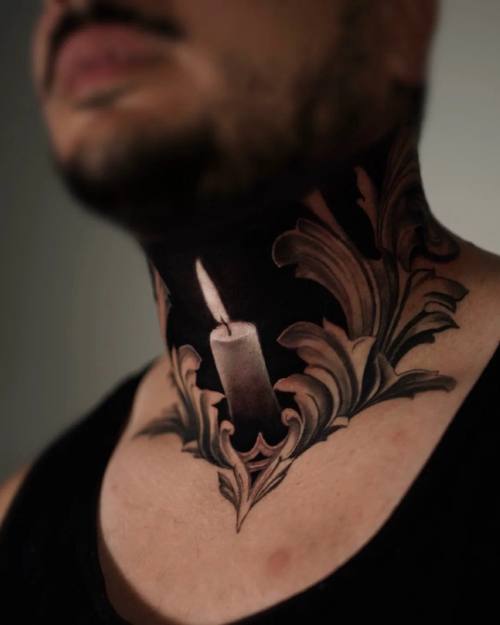
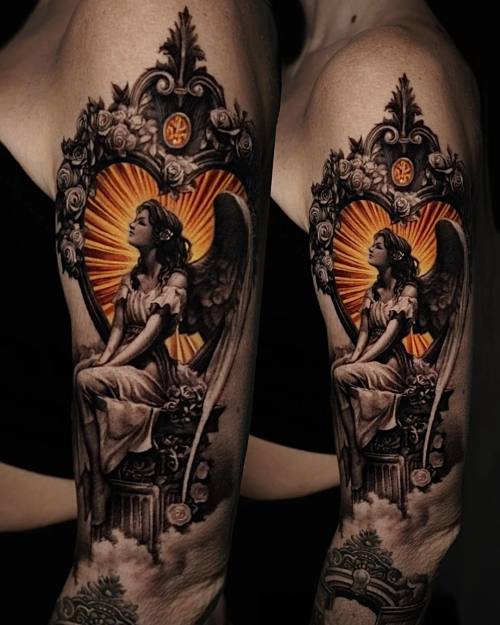
Baroque tattooing takes its language from seventeenth-century European altarpieces and sculpture: one dramatic light source, deep shadow, and ornament that wraps the limb instead of sitting flat on it.
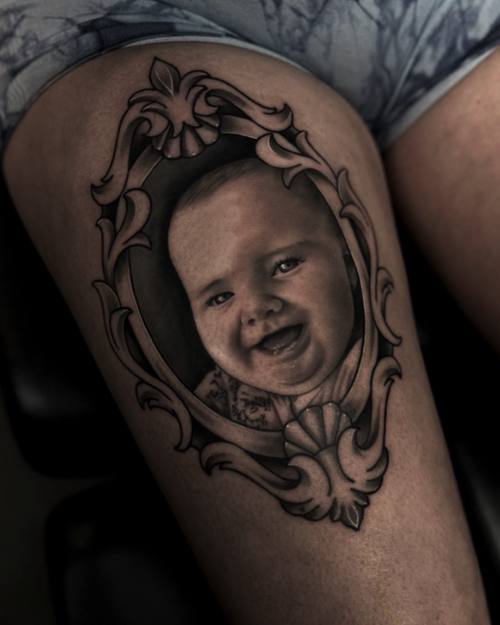
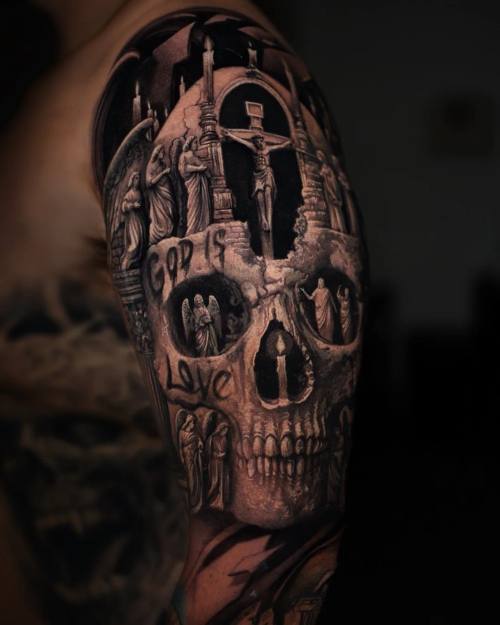
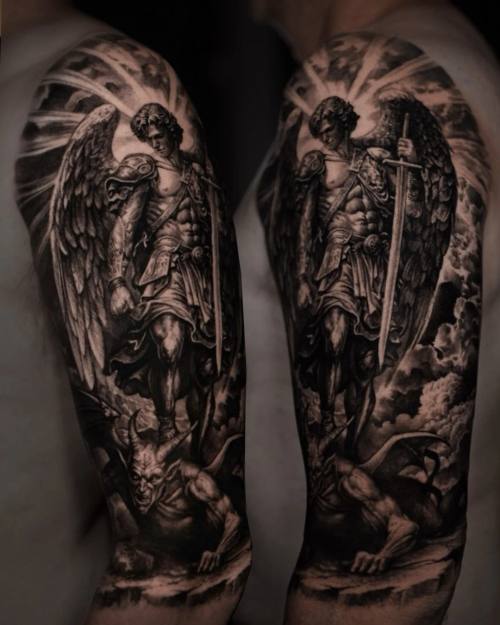
The style is not a subject, it is a way of building an image. A baroque composition is asymmetrical and diagonal - the eye is pulled across the piece rather than held in the middle. Light comes from a single direction and everything else falls into heavy shadow, so the tattoo reads from across a room and not only up close. Drapery, scrollwork, columns, wings and clouds are used as connective tissue between the main subjects, which is what lets a baroque piece cover a whole arm without turning into a collage of separate images.
On skin, the practical consequence is contrast. Untouched skin is the only source of light available, so the design has to reserve it deliberately - a face, the shoulder of a statue, the edge of a wing - and let the rest go dark. That is why baroque work is usually done in black and grey rather than colour, and why it is planned for large formats: a sleeve, a chest panel, a stomach piece or a back.
At KAZENTATTOO the style is the founder's core work. Skulls whose eye sockets open onto angels and colonnades, praying hands with a rosary, gothic architecture, clock faces and hyper-real eyes - all built as one continuous composition rather than a set of pieces added over time.
Studio: KAZENTATTOO, 7224 Melrose Ave, Los Angeles, CA 90046
Artists who work in this style: Vladimir Kozachenko (baroque and religious black and grey), Sam (mythology and sculptural black and grey), Marko (religious portraits)
Usual formats: sleeve, chest, stomach, back, thigh
Sessions: a full day, usually 12:00 to 18:00 with breaks; large compositions are planned as multi-session projects
Languages: English, Spanish, Russian, Serbian
Minimum age: 18, with no exceptions
Selected work
Planning Your Visit
Age
We tattoo and pierce adults only - 18 and over, no exceptions. California law makes tattooing anyone under 18 a misdemeanour (Penal Code 653) and the Safe Body Art Act sets the same limit (Health and Safety Code 119302). The state does allow piercing a minor with a parent or guardian present, and bans nipple and genital piercing on minors outright, but our own rule is simply 18 and over.
Consultation
Free. Text us, call the studio, or come in - the front desk answers the practical questions and the artist takes the design ones.
Booking and deposit
A deposit secures your date and comes off the final price. Some artists take walk-ins for small work; large projects are booked with a specific artist and often months ahead. Guest artists from other states and countries work here through the year.
Sessions
A working day usually runs from noon to around 6pm, sometimes 7pm, with breaks; artists set their own pace and their own day.
Touch-ups
A touch-up after healing is free when the artist judges the piece needs one - they will tell you at the end of the session or when you send healed photos.
Languages
English, Spanish, Russian and Serbian are spoken in the studio.
Finding us
7224 Melrose Ave, Los Angeles. Street parking on Melrose, plus a paid all-day lot across the road; the studio has no lot of its own. The entrance is on Melrose with no step, and the restroom is wheelchair accessible. Open 12pm to 8pm, seven days.
Payment
Credit and debit cards, cash, Zelle, Apple Pay and Google Pay.
Standards
The studio works under the California Safe Body Art Act and Los Angeles County Public Health rules for body art.
Baroque Tattoo Questions
Is baroque the same as religious tattooing?
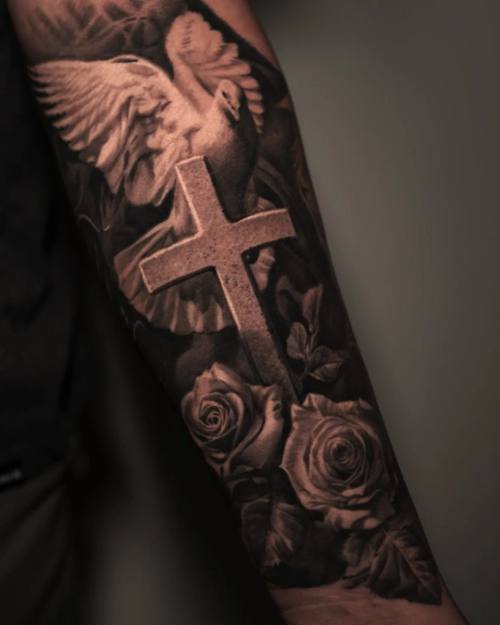
No. Religious tattooing is defined by its subject - saints, hands, crosses. Baroque is defined by composition and light. The two overlap often because baroque painting and sculpture were largely religious, but a baroque skull or a baroque architectural piece has no religious subject at all.
Does baroque work have to be black and grey?
Not by rule, but almost always in practice. The style depends on strong contrast between lit and shadowed areas, and black and grey holds that contrast on skin far longer than colour.
How long does a baroque sleeve take?
It is planned as a multi-session project rather than a single appointment. The number of sessions depends on the size and density of the composition and is agreed at consultation.
Can a baroque piece be built around an existing tattoo?
Often yes - ornament, drapery and architecture are useful for absorbing an older piece into a larger composition.
From the journal
Renaissance and Baroque Tattoos: What the Style Actually MeansWhat separates a Renaissance tattoo from a Baroque one, how marble, drapery and light are translated into black and grey, and how to choose a reference that will work on skin.